Why Whitewillow’s twenty-eight stories turn a small Indiana coal town into an unforgettable portrait of memory, desire and ordinary lives.
Some books introduce a place. Whitewillow inhabits one so completely that its streets, taverns, churches, railway tracks and graveyard begin to feel less like a setting than a living witness. Across twenty-eight interconnected stories, this collection returns to a coal-mining town in southern Indiana and discovers, in its modest corners, the full architecture of human life: ambition and disappointment, lust and faith, comedy and cruelty, work and grief. It is local fiction with a large emotional reach.
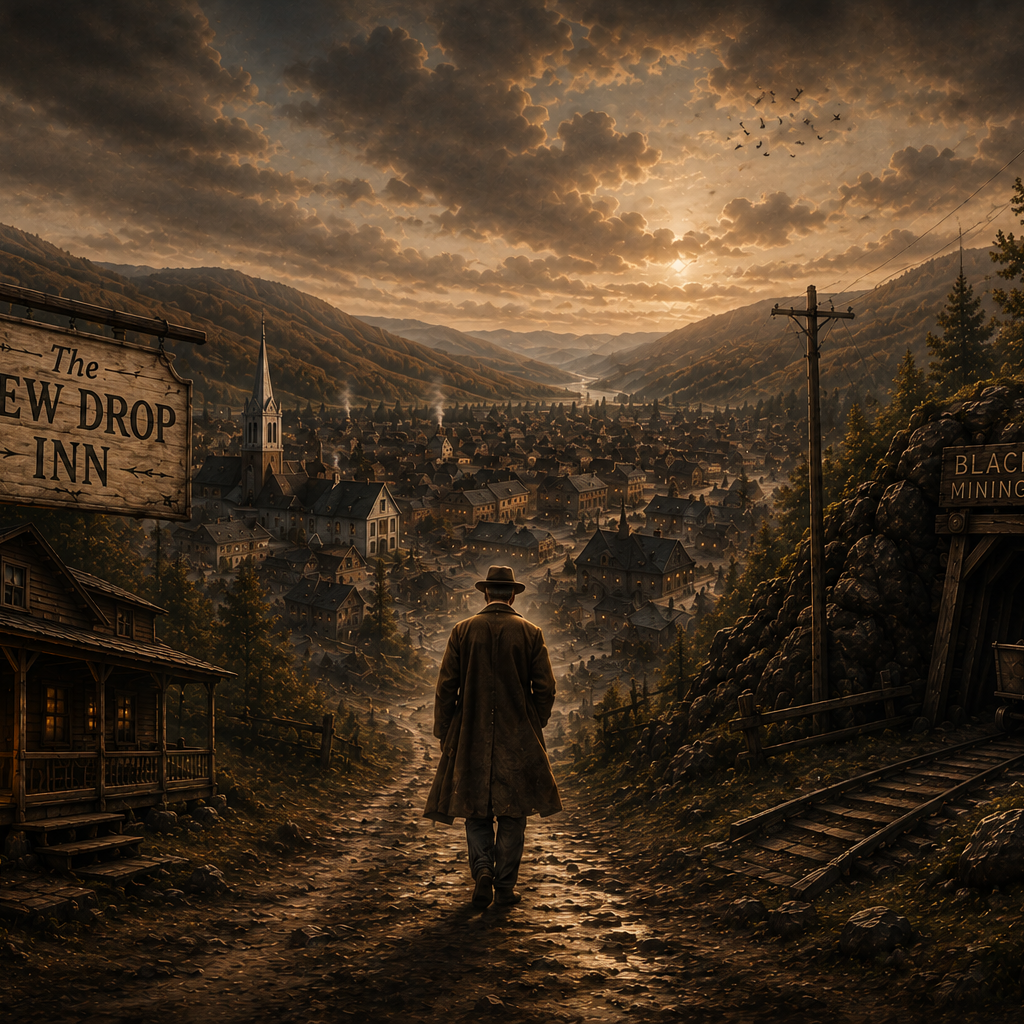
The collection’s achievement lies in its accumulation. A widow appears in one story and a wealthy businessman’s private remorse illuminates her in another. A murder that seems born of a petty quarrel turns out to be shaped by class power, buried desire and cowardice. The town’s familiar landmarks recur—the Dew Drop Inn, the mines, the railway water tank, the cemetery—and, with each return, they gather meaning. Whitewillow is not a backdrop to these lives. It is the force that preserves, judges and sometimes distorts them.
A Chronicle of the Overlooked
At a moment when fiction is often drawn to spectacle, Whitewillow finds its power in people whom history would ordinarily pass by: miners, widows, farmers, immigrant workers, tavern regulars, shopkeepers and children making their own summer adventure. Their lives are rarely easy. Mine accidents, sickness, poverty and social isolation press against almost every household. Yet the book avoids reducing hardship to misery. Its people are funny, stubborn, resourceful and contradictory. A man may have little more than a pipe, a vegetable garden and a good fishing spot, but he may also possess a wisdom unavailable to those with money and status.
That moral contrast is one of the book’s most compelling recurring notes. Sollie Rafferty and Abner Ascot, figures of modest means, understand contentment as a discipline of wanting less. By contrast, prosperous men such as Horatio Bentley, Jim Pickering and Daniel Skilton are often haunted by guilt, fixation or isolation. The collection does not offer a sentimental equation in which poverty automatically ennobles. It does something subtler: it asks what kinds of wealth make a life feel whole, and what kinds leave it hollow.
“Whitewillow is not a backdrop to these lives. It is the force that preserves, judges and sometimes distorts them.”
Desire, Judgment and the Price of Gossip
The most unsettling stories are those in which private desire meets public judgment. Emelie Pearson, a young widow trying to survive as a dressmaker, becomes a target of collective moral suspicion, even as the men condemning her conceal their own longings. Elsewhere, marriages fracture under jealousy, resentment or the quiet exhaustion of trying to be right. These narratives can turn dark—toward humiliation, violence, abandonment and regret—but their real sharpness comes from the author’s attention to social performance. In Whitewillow, people rarely know the whole truth. They make do with rumor, intuition and whatever version of events protects their own standing.
The town pump, the churches and the tavern function as informal newsrooms where lives are edited in public. That makes gossip more than background color. It is a source of power. The collection understands how a community can offer belonging while also enforcing its cruelties, particularly on women, outsiders and people whose vulnerability is visible. Its sympathy is clearest when it refuses to turn the lonely or the imperfect into simple objects of blame.
An America Built on Labor—and Story
Coal mining gives Whitewillow its physical and moral landscape. It is the work that feeds families, disables bodies and occasionally takes lives without warning. The stories recognize the special precarity of immigrant workers and the unequal protection afforded to those without money or influence. But this is not industrial fiction in the narrow sense. The mines are part of a broader social ecology that includes gardens, kitchens, bars, barns, election arguments, prayer meetings and the small rituals of ordinary survival.
What gives the book its lasting texture is its oral quality. The narrator remembers from a distance, assembling the past from direct recollection, family stories and town talk. He sometimes admits uncertainty, and that uncertainty is a strength rather than a limitation. Memory, the book suggests, is not a court record. It is a shifting inheritance: incomplete, biased, affectionate and capable of keeping the dead near.
The Final Whistle
The closing story brings the emotional design of the collection into focus. Modern life has changed the town: steam engines are gone, the railway water tank has disappeared, and the men who once lingered beside the tracks no longer gather to talk. Yet Whitewillow is not allowed to disappear entirely. The final pages return to the tuneless whistle of the old miner from the opening story, turning a small sound into an act of remembrance.
That ending is quietly beautiful because it makes no grand claim for permanence. Places fade. Communities change. Names are forgotten. But a town can survive in the stories people tell about its failures, jokes, scandals, labor and losses. Whitewillow understands that preserving ordinary lives is not a minor literary task. It is one of fiction’s most generous responsibilities.
Why This Collection Matters
Whitewillow will appeal to readers drawn to interlinked short fiction, regional American writing and character-driven storytelling with both humor and bite. Its world is old-fashioned in period but recognizable in feeling: a community trying to reconcile what it knows, what it suspects and what it chooses not to see. The book’s greatest strength is its conviction that no life is too small to carry consequence. In Whitewillow, every whistle, rumor, meal, quarrel and walk home has the potential to become part of a town’s enduring mythology.
Recommended For
Readers who value the layered communities of Sherwood Anderson, the moral weather of small-town American fiction, and story collections in which separate lives gradually form a larger human map. Whitewillow is best read not as a sequence of isolated anecdotes, but as a town biography—one built from the voices and silences of people who might otherwise have been lost to time.