LITERARY FEATURE / AMERICAN MEMORY
Before America Learned to Hurry
In Hugh F. Dowell’s Leaves From the Journal of A Quiet Man, a fictional Indiana town becomes a vivid record of work, desire, grief, class and the quiet social revolutions that remade 20th-century America.
Whitewillow is the kind of place that can disappear without ever quite vanishing. In Hugh F. Dowell’s collection, the mythical southwestern Indiana town is built from coal dust, creek water, church pews, front porches, railroad crossings and the long memories of people who rarely travel far from home. The result is not simply nostalgia for small-town America. It is something more durable: a social portrait of ordinary lives at a moment when the country was beginning to move faster than the communities that had shaped it.
The 28 stories in Leaves From the Journal of A Quiet Man range across the early decades of the 20th century, stopping before the world is fully transformed by the Second World War. They are narrated through Neil Andover, Dowell’s alter ego, who remembers Whitewillow not as a historian assembling neat facts but as a local observer who knows where reputations were made, where secrets were kept and which stories people still told years later.
That distinction matters. Whitewillow feels convincing because it is presented through accumulated human detail rather than grand historical explanation. A garden becomes a measure of dignity. A railroad crossing becomes a public square. A porch can be a theatre, a refuge or a place of mourning. The mines are not an industrial backdrop; they are the force that determines incomes, injuries, migrations, marriages and funerals.
A town built around work – and risk
Coal sits beneath many of the stories, sometimes literally. Men arrive in Whitewillow because the mines offer work. Families depend on wages that can disappear with an accident. Immigrants from Europe enter the community through the pits. Wealth, meanwhile, accumulates above ground in the hands of mine owners whose homes and influence sit at a visible distance from the workers who create their fortunes.
Dowell repeatedly returns to the asymmetry between those who own and those who labour, but he rarely turns his characters into symbols. A miner can be generous, foolish, violent, loyal or vain. A rich man can exercise power and still be emotionally impoverished. The town is full of social hierarchy, yet money is only one measure of success. One of the book’s most affecting ideas appears early: a man with simple wants may possess a form of wealth that no bank balance can improve.
That philosophy is embodied in ‘The Old Man Whistles Tunelessly’, where age, illness and memory compress an entire life into the view from a back porch. The story’s power comes from its refusal to make death tidy. The old man remembers work, danger, politics, family and his garden. The world narrows physically even as it expands in recollection. Dowell’s Whitewillow is often most alive when its characters are looking backward.
Whitewillow is less a place on a map than a civic memory: a town held together by labour, gossip, ritual, humour and the stories people refuse to forget.
Desire, judgement and the public life of private choices
For all its quiet streets, Whitewillow is not innocent. The town watches people closely. It judges women and men differently. It turns adultery, drinking, courtship, church attendance and marital failure into community business. Dowell is particularly interested in the distance between public virtue and private appetite.
‘There She Goes’ is one of the clearest examples. Emelie Pearson becomes the subject of fascination, suspicion and moral campaigning after she is widowed. Her presence exposes the uneasiness of a community that polices female respectability while many of its men remain captivated by the very behaviour they condemn. The story broadens into an examination of hypocrisy, memory and inherited shame when one of Whitewillow’s most respectable men discovers that the past he buried has not stayed buried.
Elsewhere, gossip can become destructive, sexual jealousy can become lethal and religion can provide both genuine consolation and convenient moral cover. Dowell’s narrator frequently admits that he cannot know every motive or solve every mystery. That uncertainty gives the stories an unexpectedly modern quality. People are observed closely, but they are not always explained away.
Immigrants, insiders and the complicated archive of an era
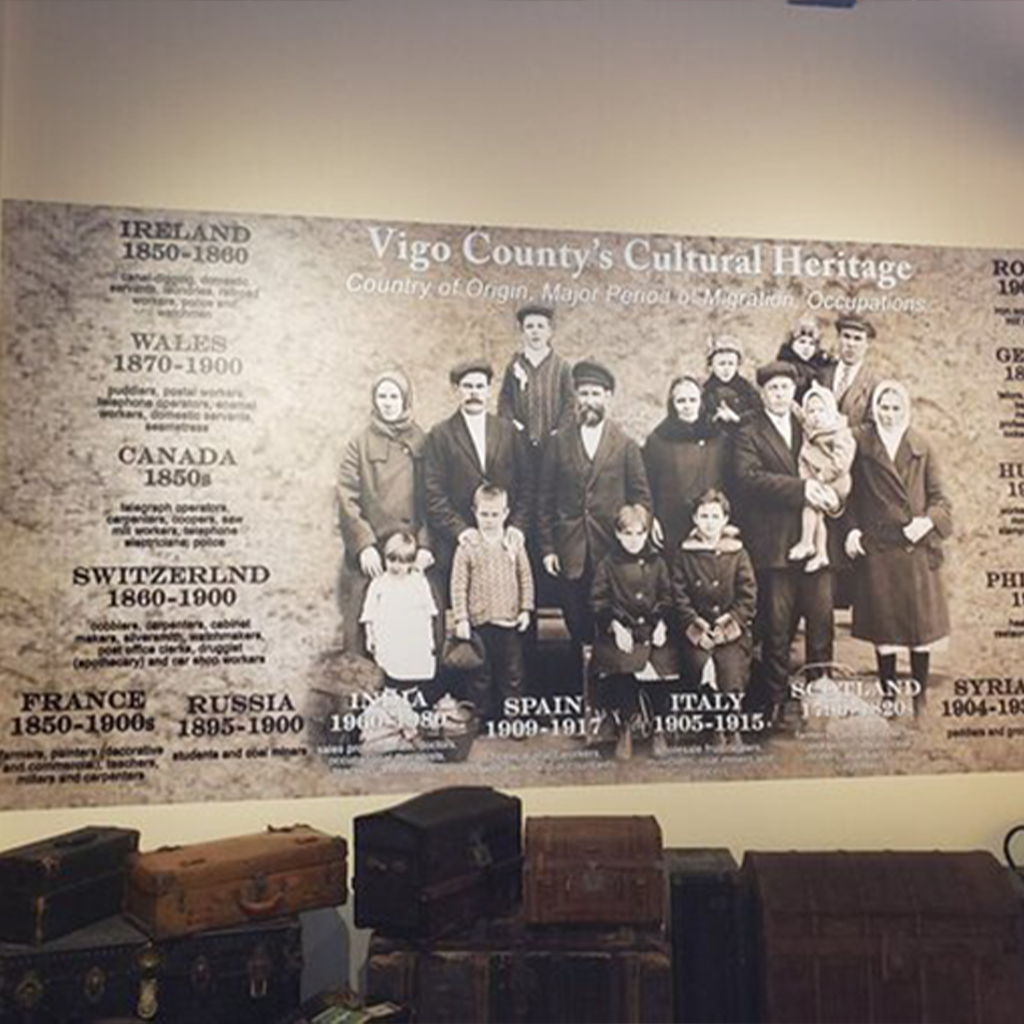
Whitewillow is also a town shaped by migration. In ‘Three People and Chopin’, southern Hungarian immigrants are drawn to Indiana by mine work. Their home life is rendered through pigs, flowers, beer, an accordion and a strain of Chopin that ultimately becomes inseparable from grief. The story moves from earthy comedy to something close to folklore, showing how outsiders can become central to a town’s collective memory.
At the same time, the collection carries the language and assumptions of the period it depicts and of the era in which many of the pieces were written. Some descriptions of ethnicity, gender and sexuality will jar contemporary readers. The family introduction explicitly asks readers to place such material in historical context. That does not require a modern reader to ignore it. A stronger reading is to treat the book as both literature and document: an account of how people spoke, classified one another and understood social boundaries in a particular American setting.
This tension is part of what makes the collection useful beyond nostalgia. The past is not made respectable after the fact. It remains untidy, funny, prejudiced, compassionate, cruel and recognisably human.
The newspaper eye
Dowell’s professional life helps explain the book’s texture. According to the family introduction, he worked in newspaper advertising before he and his wife bought the Marengo Republican-News in Illinois in 1947. He served as editor and publisher for more than two decades and wrote a weekly column, ‘From the Leaves of the Journal of a Quiet Man’. Those columns gave him a place to pursue the literary ambition he had carried since youth.
The newspaperman’s instinct is visible throughout the collection. Dowell notices occupations, street corners, local institutions, prices, habits and reputations. He understands that a community is partly made from official events – accidents, trials, elections, funerals – and partly from everything that never makes the record: what was whispered at the town pump, who sat on a porch after dark, why a man took a different road home, or what music someone claimed to hear underground.
That combination of reportage and storytelling gives Whitewillow scale. The town is small, but its emotional territory is not. Love is thwarted, marriages fail, sons leave, people reinvent themselves, fortunes shift and old scandals return. A seemingly minor character can carry an entire tragedy. The stories understand a truth local newspapers once knew intimately: to the people living it, no life is ‘small’.
What changes – and what remains
The final pages provide the collection’s clearest statement about time. Whitewillow remains recognisable, but the steam locomotives have given way to diesels, the old water tank has disappeared and the passenger train that once stopped in town has become a memory. Most tellingly, the men who used to sit by the railroad tracks in the evening are gone too.
It is tempting to read that ending as a simple lament for a slower age. Dowell’s deeper point is more interesting. The railroad once represented movement passing directly through a community where many people remained rooted for life. The men at the crossing could sit, watch and imagine a larger world. Modern life brings greater mobility, but it also erodes the habit of stopping long enough to look.
That is why the title’s ‘quiet man’ matters. Quietness here is not passivity. It is attention. The narrator stores the shape of a street, the sound of an accordion, the dangers of a mine, the contradictions of a neighbour and the fading outline of a love carved into an apple tree. Memory becomes a form of civic preservation.
Leaves From the Journal of A Quiet Man arrives, then, as more than a collection of old-town tales. It is a reminder that history is not only made in capitals, battlefields or boardrooms. It is also made in kitchens, saloons, gardens, churches, union country, company houses and beside railroad tracks – wherever ordinary people argue, work, desire, endure and remember.
Whitewillow may be mythical, but its central question is not: what is lost when a community changes faster than its stories can be told? Dowell’s answer is to tell them anyway. And in doing so, he gives the people of his vanished town one more evening by the tracks.